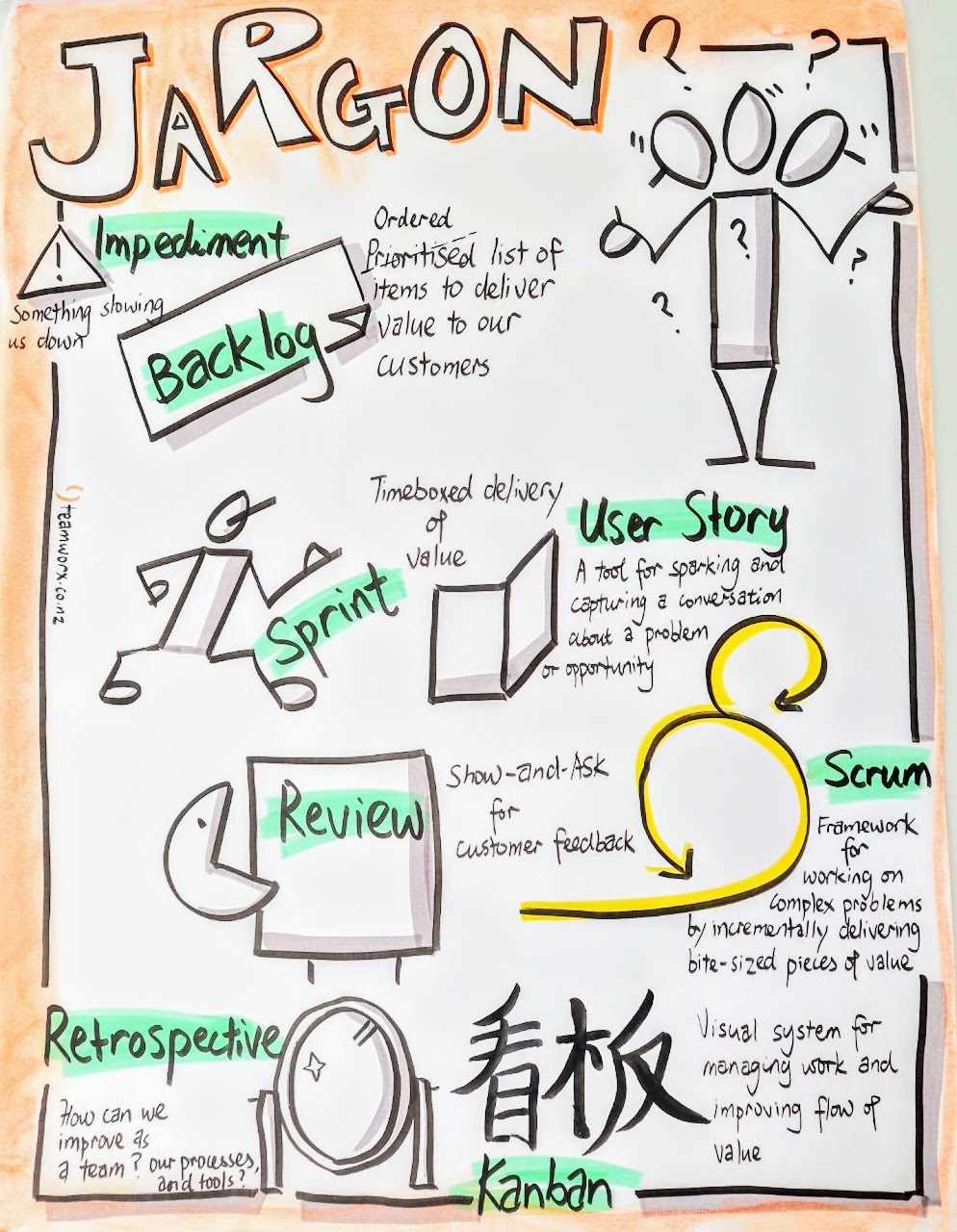
Agile Jargon - Most Common Agile Terms
- Zhi Lee
- 20 Aug, 2019
- 02 Mins read
- Agile Resources & Tools , Sketchnotes
Although Agile has its roots in software development, it is becoming the norm for companies that need to evolve in a changing landscape of rapidly moving customer needs. Here is a guide that helps demystify some of the lingo.
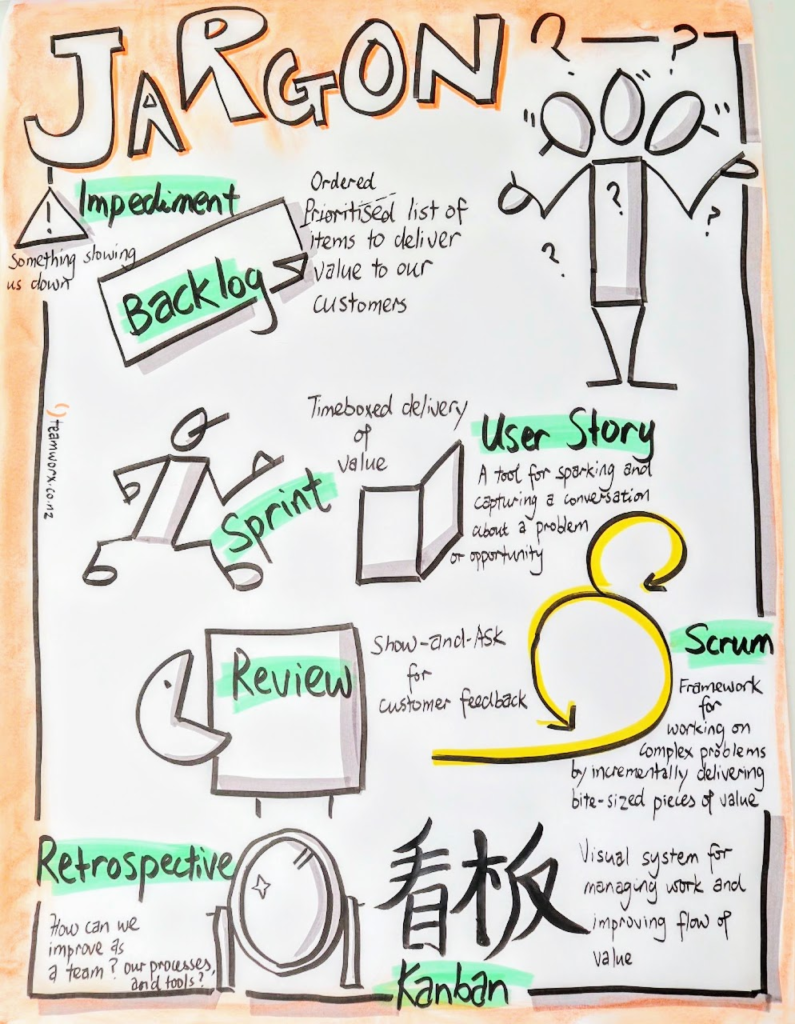
Key Agile Terms
Backlog
Ordered list of items to deliver value to our customers. The word “ordered” was chosen over “prioritised” in the 2011 Scrum Guide revision, as it provides flexibility to the Product Owner to optimize value.
Impediment
Something slowing us down. Identifying and removing impediments is key to keeping teams productive and motivated.
Sprint
Timeboxed delivery of value. Typically 1-4 weeks, sprints provide a cadence and rhythm to development work.
User Story
A tool for sparking and capturing a conversation about a problem or opportunity. User stories follow the format: “As a [user type], I want [functionality], so that [benefit]”.
Review
Show-and-ask for customer feedback. The Sprint Review is where we demonstrate completed work and gather input from stakeholders.
Scrum
Framework for working on complex problems by incrementally delivering bite-sized pieces of value. Includes roles (Product Owner, Scrum Master, Development Team), events (Sprint, Planning, Review, Retrospective), and artifacts (Product Backlog, Sprint Backlog, Increment).
Kanban
Visual system for managing work and flow of value. Pull-based system that focuses on continuous delivery rather than timeboxed iterations.
Retrospective
A meeting focused on improvements in people, process, and tools. Retrospectives help teams identify what went well, what didn’t, and commit to improvements for the next iteration.
Why Understanding Terminology Matters
When everyone on a team understands the same terminology, communication becomes clearer and more efficient. This guide demystifies agile jargon so you can participate confidently in agile ceremonies and conversations.
Whether you’re new to Agile or experienced, having a common language helps teams work together more effectively and deliver greater value to customers.
Stop "doing" process. Start delivering results.
Get in touch nowSee how we can help fine tune your business.