How Covid-19 Wiped Away Our Big Room Planning (BRP)
- Teamworx
- 20 Apr, 2020
- 03 Mins read
- Big Room Planning / PI Planning , Blog and Activities , Tips and Techniques
Virtual, Virtual, Virtual
We’ll follow-up with an article shortly about the basics of BRP and lessons learned through our experiences facilitating and observing 5 events over the past 12-months.
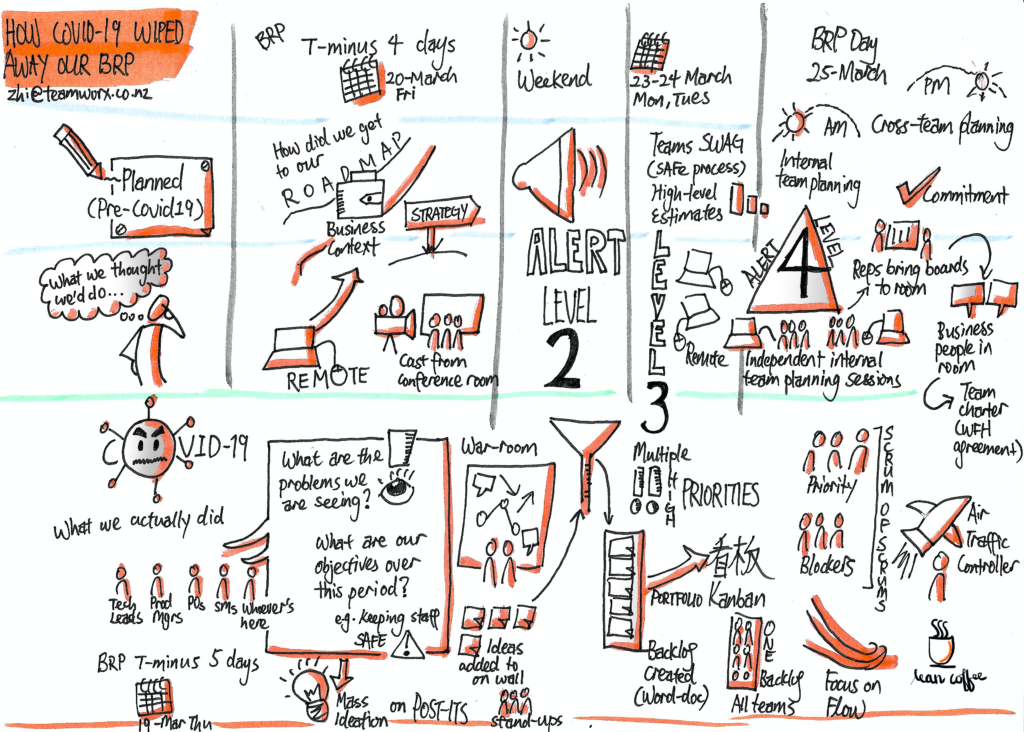
There was a greater impetus for this article as many people have expressed an interest in our virtual BRP format. Although we were scheduled to run BRP for a client right in the middle of Covid-19, this article describes the incredible pivot towards a “One Team” approach that superseded BRP and the virtual format we had planned. We describe the adapted virtual format and the reasons behind our thinking.
What is Big Room Planning?
Big Room Planning, commonly known as “BRP”, is a series of events over a day or multiple days, where multiple teams plan their work for the next quarter. As the name suggests, it is a “BIG” multi-team event with upwards of more than 100 people. Our largest BRP in 2019 comprised 400 people. Sometimes referred to as PI Planning (Program Increment Planning) in the SAFe (Scaled Agile Framework), the concepts are not framework specific. We have seen how bringing people together always results in magic!
The Original Plan – Co-located Physical BRP
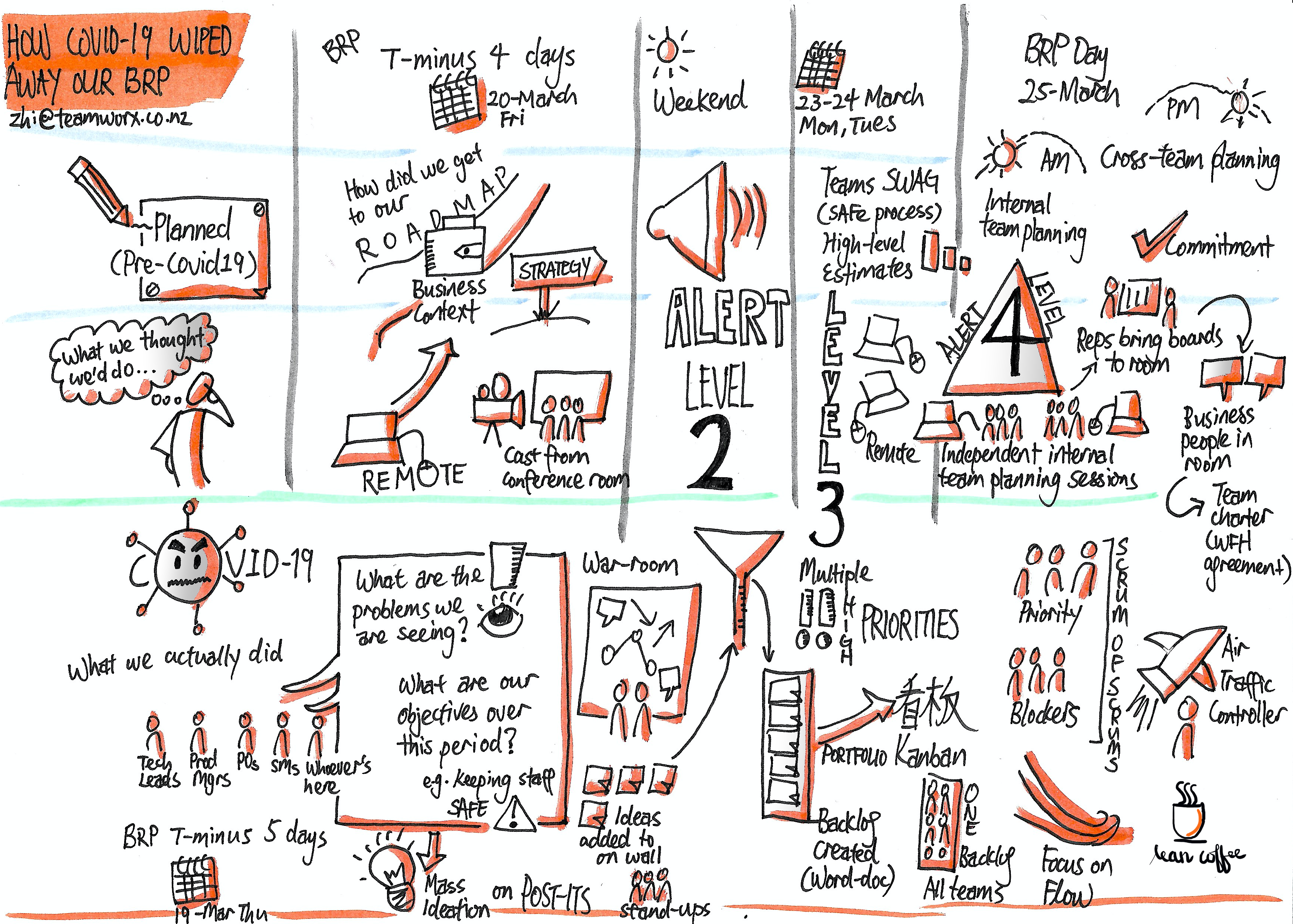
- 4 working days out from BRP – 3-hour Business context discussion led by business leaders covering:
- Previous quarter’s product performance
- Long-term vision
- Thinking around short-term priorities
- These priorities were sent out to everyone
- T-minus 2 days – Teams do high-level estimates on the priorities that come through from the business context session
- BRP Day (AM):
- Last quarter’s delivery performance
- Team planning
- Best practice representatives (e.g. UX, Architecture, Security, Ops, Analytics) arrive part-way through
- BRP Day (PM):
- Cross-team planning
- Portfolio board building
- Risk identification
- Problem solving
- Commitment
The Adapted Format – Semi-online BRP
Prior to the lockdown arrangements, we thought there was still value in having a part of the session physically located. Speakers would be streamed from one room in the office. Everyone else would dial in via Skype, and the meeting would be recorded for participants unable to make the time.
However, as lockdown restrictions became clear, we realized we needed a completely different approach.
What We Actually Did
Due to vastly changing priorities and time constraints, our teams were immediately hands-on fixing things in production.
5-days out from BRP, we turned one of our meeting rooms into a War Room.
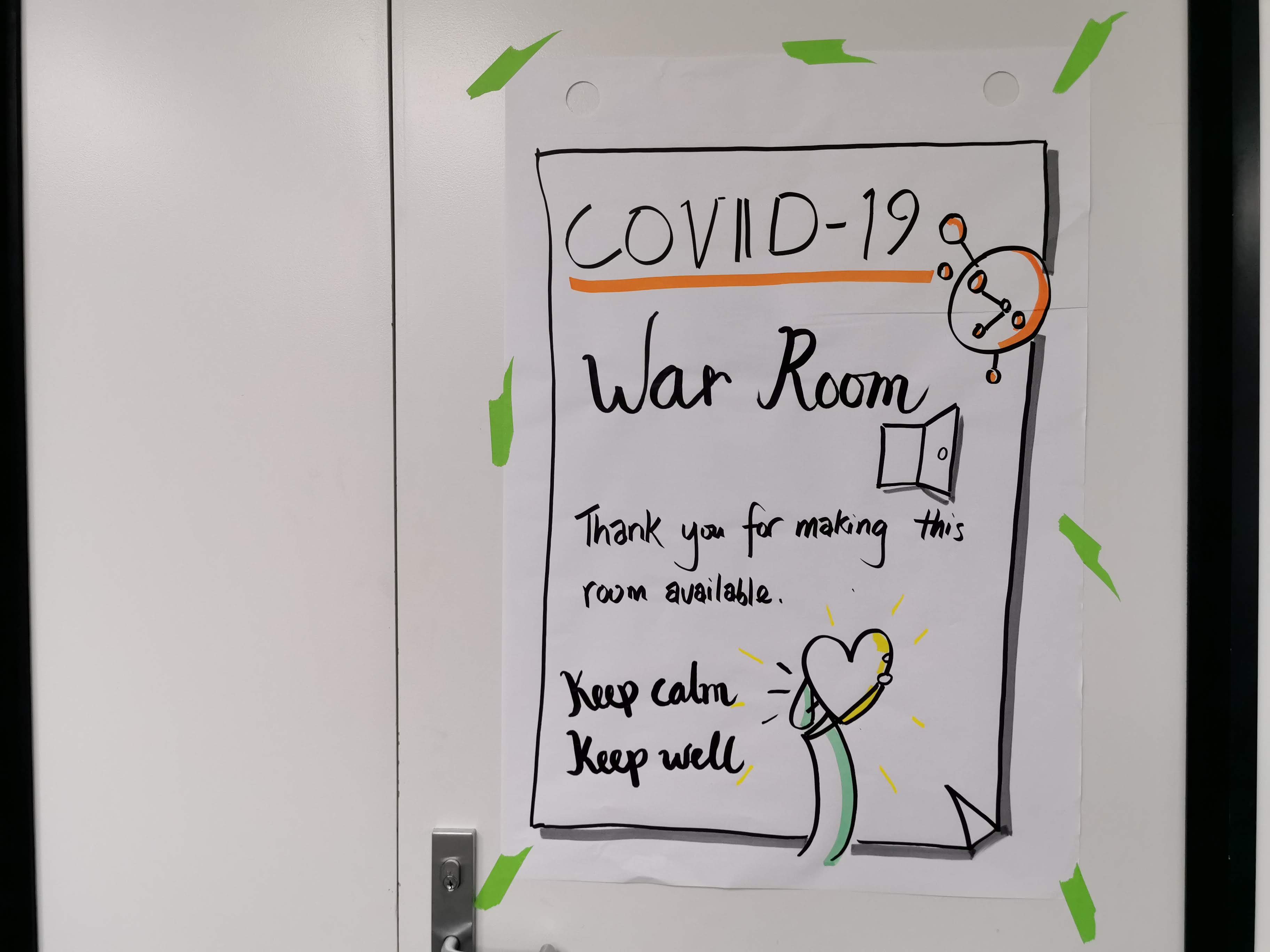
We gathered the few people in the office (some were already working remotely) to:
- Visualise on a wall all the problems we were seeing
- Think about our objectives over the coming Covid-19 period (e.g. keeping staff and customers safe)
- Brainstorm on post-its ideas to combat the problems and achieve those objectives
Over the weekend, these ideas were channeled into a single backlog (Word document), and we established a Portfolio Kanban way of working. The purpose of this was to keep the flow going:
- Focus on doing the right things
- Unblock our teams
- Take a one-team approach to combating Covid-19
We started to encounter difficulties working with a Word document, as priorities were changing and we couldn’t quite clearly see who was working on what.
We piped those priorities back into our digital tool and established a single Portfolio Kanban backlog. Teams would work on a single backlog and we’d keep the comms going with clear priorities by doing two things, facilitated by a Scrum Master (we called them the “Air Traffic Controller”. Their role was to stop planes from crashing.):
- Daily Priorities – Scrum of Scrums style meeting attended by POs and PMs
- Daily Scrum of Scrums – Attended by Scrum Masters
On the actual BRP day, we ran our first Scrum of Scrums with about 30-40 people attending, and moved into Lean Coffee around major blockers.
What Would We Change?
Covid-19 forced us to adapt our plans so quickly and it did really bring all our teams together to swarm on the things that would help our customers the most. As we see ourselves working remotely for an extended period of time, we need to think of a completely online format.
We would:
- Run a central event using Zoom
- Use breakout rooms for internal team planning
- And a digital tool to amalgamate team boards into portfolio boards
If we were to tackle another pandemic, we think we’d still work in Kanban with multiple teams on a single backlog.
Stop "doing" process. Start delivering results.
Get in touch nowSee how we can help fine tune your business.