In Sprint Planning, How Do You Prioritise the Requirements in the Backlog?
- Teamworx
- 14 Nov, 2017
- 03 Mins read
- Tips and Techniques
Having worked with many Agile teams, I find that every team has a slightly different approach to prioritisation, and some teams are better at it than others.
What Makes Prioritization Hard?
Prioritization sounds simple: “Do the most important thing first.” But “important” means different things to different stakeholders.
- To sales: What closes deals?
- To customers: What solves my immediate problem?
- To the finance director: What improves margins?
- To engineering: What’s technically clean to build?
- To the product owner: What advances our product strategy?
Often these point in different directions.
Key Factors in Prioritization
1. Customer Value
What solves the most pressing customer problem? What features do customers request most?
Questions to ask:
- What pain points does this solve?
- How many customers are affected?
- How urgent is this for them?
2. Business Value
What delivers the most value to the organization?
Questions to ask:
- What revenue does this unlock?
- What margin improvement does this provide?
- What strategic goals does this advance?
- What competitive advantage does this create?
3. Effort and Complexity
How much work is this?
Questions to ask:
- How complex is this technically?
- What unknowns do we face?
- What skills do we need?
- How much time will it take?
Effort matters because a simple, high-value feature gets you more value per unit of effort.
4. Risk and Dependencies
What could go wrong? What other work depends on this?
Questions to ask:
- What risks does this carry?
- What could prevent us from shipping it?
- What other work is blocked waiting for this?
- Do we have dependencies on other teams?
Sometimes you need to do lower-priority work to unblock higher-priority work.
5. Stakeholder Alignment
Do your stakeholders agree on what matters?
Questions to ask:
- Do different stakeholders agree on priorities?
- If not, who has the authority to decide?
- How do we communicate priorities clearly?
Misaligned priorities cause constant tension.
Prioritization Techniques
RICE Scoring
Reach: How many people will this affect? Impact: How much will it impact them? Confidence: How confident are we in this estimate? Effort: How much work is it?
Score = (Reach × Impact × Confidence) / Effort
This gives you a simple numerical ranking. Not perfect, but it forces conversation about the factors.
MoSCoW Method
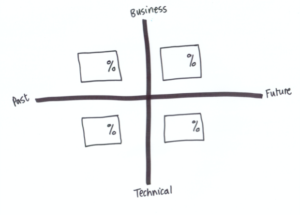
Must have: Necessary for release Should have: Important but not essential Could have: Nice to have Won’t have (this release): Explicitly deprioritized
This creates clear categories and helps stakeholders understand trade-offs.
Kano Model
Different features matter differently:
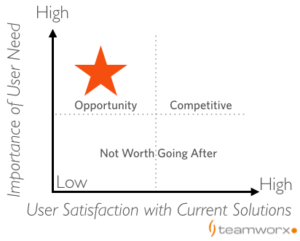
Threshold: Must be present (or you lose customers) Performance: More is better (“Fast checkout” is performance—faster is always better) Delighter: Surprising and nice to have (something unexpected that delights)
Understand which category your features are in. Don’t over-invest in performance features—there are diminishing returns. Delighters matter but aren’t must-haves.
Weighted Scoring
Create a simple spreadsheet:
- List features down the left
- Create columns: Customer Value (1-5), Business Value (1-5), Effort (-1 to -5), Risk (-1 to -5)
- Weight the factors (e.g., Customer Value = 40%, Business Value = 30%, etc.)
- Calculate scores
Again, not perfect, but it forces conversation and transparency.
Making Prioritization Work
1. Get Clear on What “Valuable” Means
In your organization, what matters most? Without clarity here, prioritization is just politics.
2. Involve Stakeholders
Prioritization decisions should be informed by stakeholder input, but there needs to be a clear decision-maker. (Usually the Product Owner in Scrum.)
3. Make Priorities Transparent
Everyone should understand not just what’s being prioritized, but why. This builds alignment.
4. Revisit Regularly
Market conditions change. Customer needs change. Reprioritize periodically. What was #1 last quarter might be #5 now.
5. Respect the Trade-Off
Prioritizing X means not doing Y. Make that explicit. Help people understand what you’re choosing not to do.
6. Say No
This is hard, especially in customer-facing organizations. But “no” is as important as “yes” in prioritization.
Common Pitfalls
- Making the squeaky wheel highest priority: The person who yells loudest isn’t always the voice of the majority
- Goldilocks syndrome: Everything is medium priority. This isn’t a priority list—it’s a wish list
- Perfect prioritization: You won’t get it right. Good enough and transparent beats perfect and political
- Ignoring dependencies: Sometimes low-priority work becomes high-priority because of dependencies
- No dissenting voice: If everyone agrees, someone’s probably not being honest
Getting Input from Your Team
Your development team has valuable insight:
- Implementation effort and risks
- Technical dependencies
- What will be satisfying to build (matters for morale)
Include them in prioritization discussions. They’ll often identify risks that business stakeholders miss.
The Real Skill
In my experience, teams that prioritize well have:
- Clear values and strategy (they know what matters)
- Good conversations (they talk through trade-offs)
- A trusted decision-maker (someone has authority to decide)
- Transparency (everyone understands the logic)
- Flexibility (they adjust as reality changes)
It’s not about the perfect scoring model. It’s about thoughtful decision-making that’s transparent and aligned.
Try one of these techniques with your team. See if it helps. Adapt it. Make prioritization a conversation, not a political battle.
Stop "doing" process. Start delivering results.
Get in touch nowSee how we can help fine tune your business.