Meeting Evaluation Canvas
- Teamworx
- 22 Sep, 2021
- 02 Mins read
- Agile Resources & Tools , Tips and Techniques
Meetings are where much of the team’s work happens. But are your meetings effective? Use this canvas to evaluate and continuously improve your team’s meeting practices.
Why Evaluate Meetings?
Ineffective meetings waste time and drain energy. A few high-quality meetings where decisions get made and alignment happens are more valuable than many low-quality meetings.
The Meeting Evaluation Canvas
This canvas helps you assess meetings across 5 dimensions:
1. Purpose
- Clear purpose defined
- Everyone understood the purpose
- Purpose was relevant to all participants
- Purpose was achieved
Question: Did we accomplish what we met to accomplish?
2. Participants
- Right people attended
- Everyone contributed
- Attendance was necessary
- Key voices weren’t missing
Question: Were the people in this room the right people?
3. Time
- Meeting started on time
- Meeting ended on time
- Pacing was appropriate
- No time was wasted
Question: Did we use our time well?
4. Format & Facilitation
- Format matched the purpose
- Facilitation was clear
- Engagement was high
- Inclusive (everyone’s voice heard)
Question: Was the way we conducted the meeting effective?
5. Outcomes
- Clear decisions made
- Actions and owners identified
- Next steps clear
- Commitment to follow through
Question: Did we walk out with clear outcomes?
The Canvas in Action
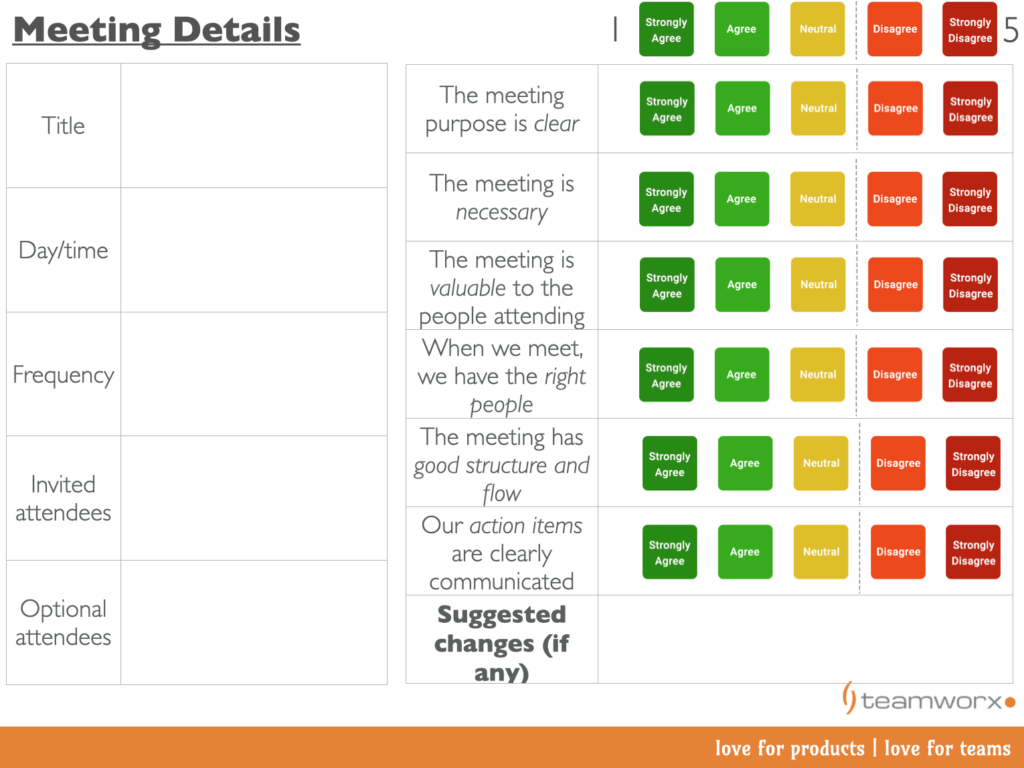
Using the Canvas
Option 1: Quick Pulse Check (2 minutes)
- Thumbs up (good) / sideways (okay) / down (not good) for each dimension
- One person mentions what went well and what to improve next time
Option 2: Deeper Discussion (10 minutes)
- Team rates each dimension 1-5
- Discuss any dimension that scored low
- Commit to one improvement for next meeting
Option 3: Monthly Review (30 minutes)
- Analyze the last month of meetings
- Identify patterns across all meetings
- Design improvements to your meeting culture
Sample Improvements
If “Purpose” scores low:
- Send agenda 24 hours in advance
- Start with 2-minute purpose statement
- Check in: “Is this still the right use of our time?”
If “Participants” scores low:
- Evaluate who truly needs to attend
- Create optional “parking lot” items for those interested
- Record for those who can’t attend live
If “Time” scores low:
- Use a visible timer
- Appoint a timekeeper
- Shorten meeting by 5-10 minutes
- Move lower-priority items to async
If “Format” scores low:
- Vary the format (breakout rooms, silent brainstorm, walking meeting)
- Use visual tools (whiteboards, sticky notes)
- Change location or setup
- Invite more participation
If “Outcomes” scores low:
- Spend last 5 minutes summarizing decisions
- Assign a note-taker
- Use a shared document for live notes
- Confirm action owners before closing
The Meeting Culture Shift
Evaluating meetings regularly helps create a culture of:
- Respect for time - Everyone’s time is valuable
- Clarity - Purpose and outcomes are clear
- Psychological safety - People feel comfortable contributing
- Continuous improvement - Meetings get better over time
Start using the Meeting Evaluation Canvas with your team this week!
Download Meeting Evaluation Canvas (PDF)
Want coaching on improving your meeting culture? Contact Teamworx!
Stop "doing" process. Start delivering results.
Get in touch nowSee how we can help fine tune your business.