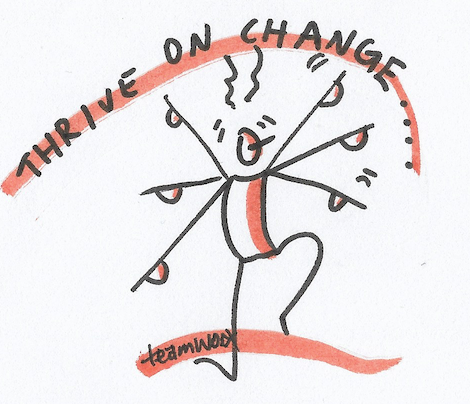
Thrive on Change – Change Management and Agile
- Teamworx
- 25 Sep, 2019
- 02 Mins read
- Agile Resources & Tools , Blog and Activities , Change Management
Zhi Lee and Katherine Rive from Teamworx share lessons and experiences in change management. They talk about the synergies between Agile and change management principles. Learn the basics of change management – what it is, and some simple tips for supporting people through change.
Talk Sponsors: Amazon Web Services NZ, Gothenburg Restaurant (Hamilton), Teamworx Consulting NZ
Why Change Management Matters in Agile
Many organizations adopt Agile frameworks without addressing the people side of change. The result? Technical implementation of Scrum or Kanban, but the culture and mindset haven’t shifted. That’s where change management becomes critical.
The Fundamentals of Change Management
Understanding Change Resistance
Resistance to change isn’t about being difficult—it’s about loss anxiety. People worry:
- “Will I still be valued?”
- “Can I do this?”
- “Will I lose what I’ve built?”
Change management addresses these concerns directly.
The Three Levels of Change
Individual: How do I learn new ways of working? Team: How does our team new new dynamics and collaboration patterns? Organizational: How does the organization align systems, structure, and culture?
Most Agile adoptions focus on the individual level (teaching Scrum). Effective transformations address all three.
Synergies with Agile
Change management and Agile are remarkably aligned:
Iterative Approach
Both change management and Agile value iteration. You don’t transform overnight—you take small steps, learn, and adjust.
Feedback Loops
Change management is all about listening and responding. So is Agile. Both frameworks build in regular feedback.
Empowering People
Agile empowers teams to self-manage. Change management empowers people to shape their own change journey.
Embracing Uncertainty
Both acknowledge that the path forward isn’t always clear. We learn as we go.
Practical Tips for Change
1. Make the Case for Change
Help people understand why change is needed. A clear “why” is motivating.
2. Involve People Early
Don’t surprise people with change. Involve them in the planning and design. Co-creation builds ownership.
3. Celebrate Wins
Acknowledge progress and celebrate early wins. This builds momentum and belief.
4. Support Learning
Provide training, mentoring, and space to practice new ways of working. Expect a dip in productivity initially.
5. Be Honest about the Challenges
Don’t pretend change is easy. Acknowledge the difficulty while maintaining that it’s worth it.
6. Stay Connected
Regular communication is critical. Use multiple channels. Overcommunicate if anything.
7. Adapt as You Learn
Just like Agile, change initiatives should adapt based on what you learn. Be willing to pivot.
Common Traps
Assuming Understanding Equals Buy-In Just because someone understands Agile doesn’t mean they’ve bought into the change. These are different things.
Focusing on Structure Without Culture You can organize teams by Scrum roles and ceremonies, but if the culture doesn’t shift to collaboration and autonomy, you’ve only changed the surface.
Underestimating the Timeline Meaningful change takes time. Real culture change is measured in years, not months.
The Path Forward
Organizational transformation requires both technical change (process, tools) and human change (mindset, behavior, culture). Make space for both.
When you apply Agile principles to your change management—iterating, involving people, getting feedback, adapting—you create the environment for real transformation.
Change is hard. But with thoughtful change management paired with Agile principles, you can help your organization not just survive change, but thrive through it.
Stop "doing" process. Start delivering results.
Get in touch nowSee how we can help fine tune your business.